Tactics · May 2026 · 6 min read
Early, regular, or late: the deadline math nobody explains
When the late fee is worth paying, when the early bird is a trap, and the rule of thumb every first-time submitter needs to hear before they hit submit.
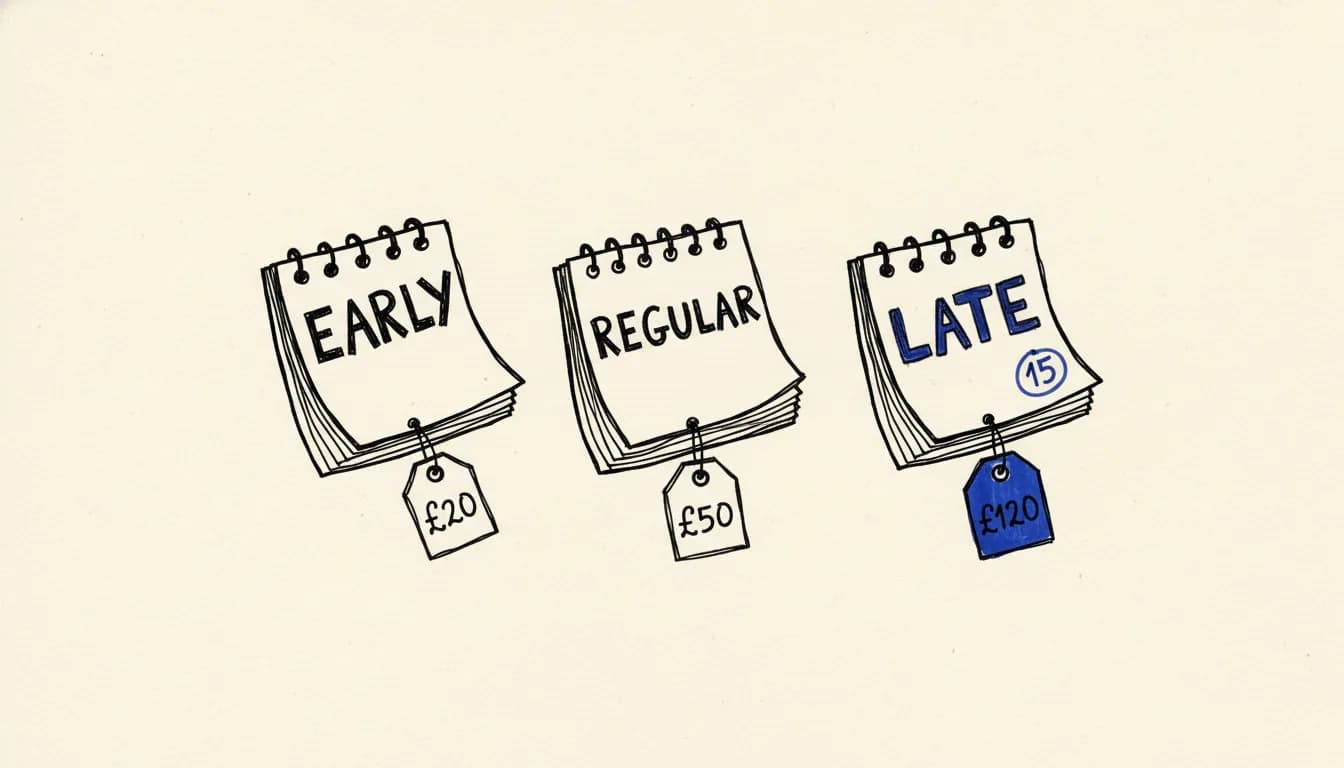
Every festival on FilmFreeway has three (sometimes four) deadlines: earliest bird, early bird, regular, late. The fees usually climb in small steps from one to the next, often in the region of £5 to £15, and a late entry to a Tier 1 festival can cost a fair bit more than the earliest. As a rule of thumb the late fee tends to run somewhere between roughly 1.4 and 2 times the earliest, though the exact figures vary by festival and change every year, so check the current fee tiers before you plan around them.
Filmmakers tend to treat the early bird as a discount. It is not, not really. It is a price for entering before your film is finished. Whether that is worth doing depends on three things: the festival, your film's readiness, and how full the slate is by the time you submit.
What programmers actually do with deadlines
The published deadlines are not gates. They are pricing tiers. Selection happens after the late deadline closes, when the full submission pool is in. A film submitted on the earliest day and a film submitted on the latest day are read at the same time, by the same person, with the same criteria.
The one structural advantage of early submission is at festivals that operate rolling acceptance, mostly genre, regional, and specialist festivals. Those programmes do fill up. A film submitted late to a small festival with 12 slots and 600 submissions might genuinely be at a disadvantage. A film submitted late to Sundance is not.
The rule: at major festivals with single-pass selection (most Tier 1 and Tier 2), deadline timing is purely a budget decision. At smaller festivals with rolling or themed strands, earlier is better.
When the early bird is a trap
The early bird saves you £15. Submitting your film at picture lock instead of after the colour grade costs you, conservatively, a programmer's confidence. If your film is going to look or sound meaningfully better in three weeks, wait three weeks.
Common early-bird mistakes:
- Submitting before the final sound mix because the deadline is on Friday
- Using a temp colour grade with placeholder VFX
- Submitting a synopsis you wrote in 20 minutes because the platform required one
- Uploading a screener with the wrong aspect ratio because there was no time to re-export
Programmers can tell. A submission with a temp mix and a thrown-together logline reads as unfinished, which it is. The £15 you saved costs you the screening. Pay the regular fee, finish the film, write the materials properly.
When the late fee is worth paying
Three situations where the late fee is the right call:
1. The film is now genuinely better than it was a month ago. A re-cut, a re-grade, or a new sound mix can transform a film. If your film improved during the early-to-regular window, submit the new cut at the late fee. The fee is small compared to the cost of being judged on the worse version.
2. A festival opened up because of premiere status changes. You found out a higher-priority festival is not selecting your film, which means your premiere is back on the market. A late submission to a festival that fits is worth the fee.
3. The festival is a known fit and you only just found it. Specialist and regional festivals are easy to miss. If a genuinely well-targeted festival pops up two weeks before its late deadline, paying late is fine. The premium is the cost of new information, not punishment.
The withdrawal fee question
Most submission platforms charge a non-refundable fee. If your film is selected by a higher-priority festival and you need to withdraw from a lower one, you lose the entry fee. Plan for this. If you submitted to 20 festivals early and three of them later become a premiere conflict, that is £100 to £150 walking out the door.
This is why the smart sequence is: world premiere candidates first, then regional premiere candidates after the world premiere question is resolved. Submitting to everything at once at the early bird locks you in to a budget you may not be able to use.
A simple rule of thumb
For most first-time submitters, the answer is:
- Pay the regular fee at Tier 1 and Tier 2 festivals. Submit a finished film with a polished package.
- Pay the early bird only at festivals with rolling selection (small regional, genre, themed strands) where slate-filling is a real effect.
- Pay the late fee only when something changed: the film, the premiere status, or your knowledge of the festival.
- Never pay the earliest bird on an unfinished film just because the discount looks good.
The cheapest submission is the one you do not make. The next cheapest is the one you make once, on the finished film, with materials you would be proud to send to the programmer in person. Everything else is a tax on rushing.
Frequently asked questions
Does submitting to a film festival early improve my chances of being selected?
At most major festivals with single-pass selection, no. Selection happens after the late deadline closes, when the full submission pool is read together, so an early entry and a late entry are judged at the same time by the same people. The exception is festivals that run rolling acceptance, mostly small regional, genre, and themed strands, where slates can genuinely fill up and earlier is better.
Is the film festival early bird fee actually a discount?
Not really. The early bird is the price for entering before your film is finished, not a reward for being organised. If your film will look or sound meaningfully better after the colour grade or final sound mix, the small saving is not worth submitting an unfinished cut that reads as unfinished to a programmer.
When is it worth paying the late film festival fee?
Pay the late fee when something has changed: the film is now genuinely better than the earlier cut, a higher-priority festival passed and freed up your premiere status, or you just discovered a festival that is a strong fit close to its deadline. In those cases the premium is the cost of new information, not a penalty. The fee is small compared to being judged on a worse version or missing a well-targeted festival.
What happens to my entry fee if I withdraw after being accepted elsewhere?
Submission fees are generally non-refundable, so if a higher-priority festival accepts you and you withdraw from a lower one, you lose that entry fee. This is why a staged sequence helps: pursue world premiere candidates first, then regional premiere candidates once the world premiere question is settled, rather than submitting to everything at once. Check the current terms and fee tiers on the official festival or platform listing before you plan around them.
Related
Track every deadline in one place
FilmRun keeps your submission deadlines in one campaign calendar, with reminders at 30 days, 7 days, and 24 hours so late fees are harder to miss.