After submission · May 2026 · 7 min read
Sales agents vs distributors: who you actually need to find
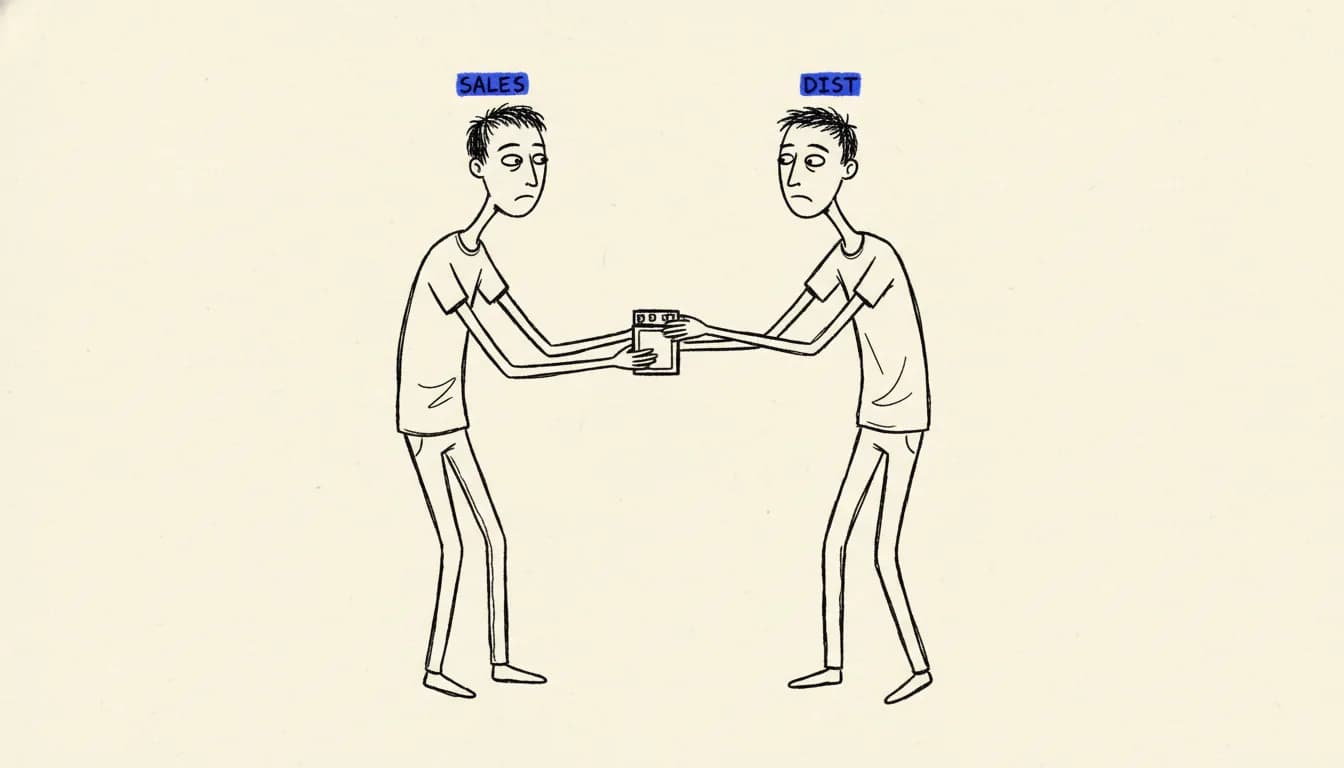
The sales agent finds you the distributor. The distributor releases the film. Get this backwards and you will be pitching the wrong people for a year.
Most first-time filmmakers chase distributors at festivals. The actual currency is meeting sales agents, who then introduce distributors. Skipping that link wastes the festival run.
Sales agents and distributors do different jobs, in different order, for different fees, with different contracts. Knowing the difference is the difference between a deal and a year of dead-end pitches.
What a sales agent does
A sales agent is the intermediary who sells rights to distributors. They handle the territory-by-territory negotiation, the screening market presentations (Cannes Marché, Berlin EFM, AFM), the contract drafting, and the recoupment accounting. Most foreign sales agents specialise in territory-by-territory rights sales: UK, Germany, France, Japan, etc. Some handle worldwide rights.
Sales agent commission typically runs from 15 to 35 percent of sales revenue, with domestic deals nearer 10 to 15 percent and international rights nearer 25 to 35 percent, plus recoupable expenses (marketing, market fees, deliverable creation, sometimes a flat retainer). Check current terms before you sign, since rates and recoupable expenses shift year to year.
What a distributor does
A distributor buys the rights for a specific territory and a specific window. They handle the theatrical release (if any), the marketing, the VOD listing, the streaming licensing, and the press cycle in their territory. They take the financial risk of the release in exchange for a share of revenue. As a rough benchmark, a distributor's share of a domestic theatrical release is often around 35 percent of gross, with television licence fees nearer 25 percent and a wider range of roughly 10 to 40 percent depending on the deal. That sits alongside, not instead of, the sales agent's commission. Treat these as planning figures and check the actual terms in any specific offer.
Distributors operate at three rough levels:
- Studio specialty: Searchlight, Focus Features, A24, Neon. Higher minimum guarantees, bigger marketing spend, theatrical-first.
- Independent distributors: Magnolia, IFC, Curzon, Bulldog, Mubi. Mid-tier guarantees, focused theatrical or hybrid release.
- Direct-to-streamer / VOD aggregators: Filmhub, Quiver, Distribber. No minimum guarantee, the filmmaker uploads, the platform handles VOD listing, revenue is back-end only.
The deal flow at a festival
- You premiere the film at a festival
- Sales agents in attendance watch the film, decide whether they want to represent it
- A sales agent who wants the film makes an offer to you (the deal terms: their commission, their expenses cap, the term length, the territories they handle)
- You sign with a sales agent
- The sales agent screens the film for distributors at the next market (Cannes Marché, AFM, EFM)
- Distributors offer to buy specific territories
- The sales agent negotiates and closes those deals
- Recoupment flows: distributor revenue, minus distributor expenses, to the sales agent, who deducts their commission and expenses, then pays you
Most films do not skip the sales agent step. The distributors who attend festivals are usually scouting for sales agents to follow up with, not for filmmakers to approach directly.
Aggregator route (skipping the sales agent)
For lower-budget films, films without theatrical ambition, or films that did not get a sales agent at the festival, the aggregator route is the alternative:
- Filmhub, Quiver, Distribber: aggregators that distribute your film direct to Tubi, Amazon Prime Video, Apple TV, YouTube Movies, Hoopla, Kanopy
- Fee structure: flat fee or revenue share (varies), no minimum guarantee, no agent commission
- Trade-off: no theatrical, no marketing budget, much smaller revenue per stream, but you keep more of what comes in
Contract terms to watch for
- Expense recoupment caps. Without a cap, the sales agent can deduct unlimited "marketing" expenses before you see a penny. Negotiate a hard cap.
- All-rights grabs. A sales agent who wants all rights worldwide for 15 years is over-reaching. Carve out specific territories you might handle directly (your home country, especially).
- Vague delivery requirements. "Industry-standard deliverables" can cost £20,000 in masters, subtitles, M and E tracks, KDM-encrypted DCPs, and clearance documents. Get the deliverable spec in writing.
- Long initial term with no performance gates. Negotiate a sunset clause: if the sales agent has not closed a meaningful number of territories in the first 12 months, you can terminate.
- Right of first refusal on next film. Avoid. You do not yet know how this relationship will go.
How to find a good sales agent
Best signal: ask other filmmakers who have completed a circuit with the same sales agent whether they would sign with them again. Independent producers' networks (the IFP in the US, BAFTA Connect in the UK, EAVE in Europe) maintain informal reputation databases. The Film Collaborative publishes a useful primer.
Red signal: a sales agent who promises minimum guarantees verbally and won't put them in writing. The verbal promise is worthless.
The honest framing
A sales agent is a salaried hand that holds your film for two years and decides whether it gets seen outside the festival. The right sales agent makes the film a career-launching asset. The wrong one buries it. The contract is the difference. Hire a film lawyer to read it before you sign.
Frequently asked questions
What is the difference between a sales agent and a distributor?
A sales agent is the intermediary who sells your film's rights to distributors, handling the territory-by-territory negotiation, the screening market presentations, the contract drafting, and the recoupment accounting. A distributor buys the rights for a specific territory and window, then handles the theatrical release, marketing, VOD listing, streaming licensing, and press in that territory. The sales agent finds you the distributor, and the distributor releases the film.
Do you need a sales agent before a distributor?
In most cases, yes. The usual order is that you sign with a sales agent first, and the sales agent then screens the film for distributors at the next market. The distributors who attend festivals are usually scouting for sales agents to follow up with, not for filmmakers to approach directly, so most films do not skip the sales agent step.
How much commission does a film sales agent take?
Sales agent commission typically runs from 15 to 35 percent of sales revenue, with domestic deals nearer 10 to 15 percent and international rights nearer 25 to 35 percent, plus recoupable expenses such as marketing, market fees, and deliverable creation. Rates and recoupable expenses shift year to year, so check the current terms before you sign.
Can you distribute a film without a sales agent?
Yes. For lower-budget films, films without theatrical ambition, or films that did not get a sales agent at a festival, the aggregator route is the alternative. Aggregators distribute your film direct to VOD and streaming platforms for a flat fee or revenue share, with no minimum guarantee and no agent commission. The trade-off is no theatrical release and no marketing budget, but you keep more of what comes in.
Related
Plan the campaign that gets you in the room
FilmRun keeps your festival strategy, deadlines, and fees in one place so you arrive at each market prepared and submit to the festivals that fit your film.